
Rankin Estates
A 126-lot subdivision in the Nipsachuck Woods has been fought over for more than two decades — through a fraudulent expert witness, a $6 million lawsuit, and a settlement process controversial enough to spawn its own neighborhood coalition. It was approved by the Planning Board on Aug. 27, 2026, under the explicit threat of another lawsuit.
Rankin Estate lawyers threaten to double the size of the development, should their proposal not go through.
Rankin Estate lawyers threaten lawsuits at the Planning Board meeting.
The Detailed Timeline of Rankin Estates: 2005–2026
2005 - 2011: The First Fight
An attempt to settle the lawsuit collapsed into further controversy when it was revealed the town had drafted an ordinance loosening gravel-extraction rules with help from the developer's own attorney. Residents formed the North Smithfield Neighborhood Coalition to stop the settlement. The Coalition tried to formally intervene in the underlying 2008 lawsuits, but a Providence County Superior Court judge denied the motion in 2012, ruling they'd waited too long to intervene.
2011: Town Council Gets Caught Helping
An attempt to settle the lawsuit collapsed into further controversy when it was revealed the town had drafted an ordinance loosening gravel-extraction rules with help from the developer's own attorney. Residents formed the North Smithfield Neighborhood Coalition to stop the settlement.
“This is now the second time the town's lawyers have presented a 'settlement' to the council that contained terms so outrageous that no competent person would ever agree to.”
The Coalition tried to formally intervene in the underlying 2008 lawsuits, but a Providence County Superior Court judge denied the motion in 2012, ruling they'd waited too long to intervene.
2014: Settled Without Gravel; No Movement? Interesting…
The suits were finally settled with a $100,000 tax abatement over seven years.
"When residents asked a very simple question to the town attorneys and the Town Council - what will the tax treaty cost the town and its residents - the reply was not that much," said Ken Murphy, who for years has been part of a watchdog group with an eye on the deal. "No estimate was given and no investigation was made by the Town Council. The cost to the town was simply unknown and apparently they did not want to know."
State Representative Brian Newberry introduced H 8153 to provide Rankin Estates with this tax relief, which was passed and signed into law on July 3, 2014.
The town made an explicit commitment that the deal would not grant gravel-extraction rights. The developer let the abatement lapse by missing its own 2016 deadline to resubmit a master plan.
2019: The “New” Master Plan
A redesigned "conservation development" version won master plan approval on March 6, 2019, conditioned on a full archaeological study of the site and adoption of natural-resource protection measures. See the following Planning Board A subsequent RIHPHC-reviewed study found no evidence the stone mounds contained human remains — a finding the developer's team leans on heavily, though it addresses only the burial-mound question, not the separate sacred-land and historic-battlefield claims raised later.
2024: Clearing Without Approval
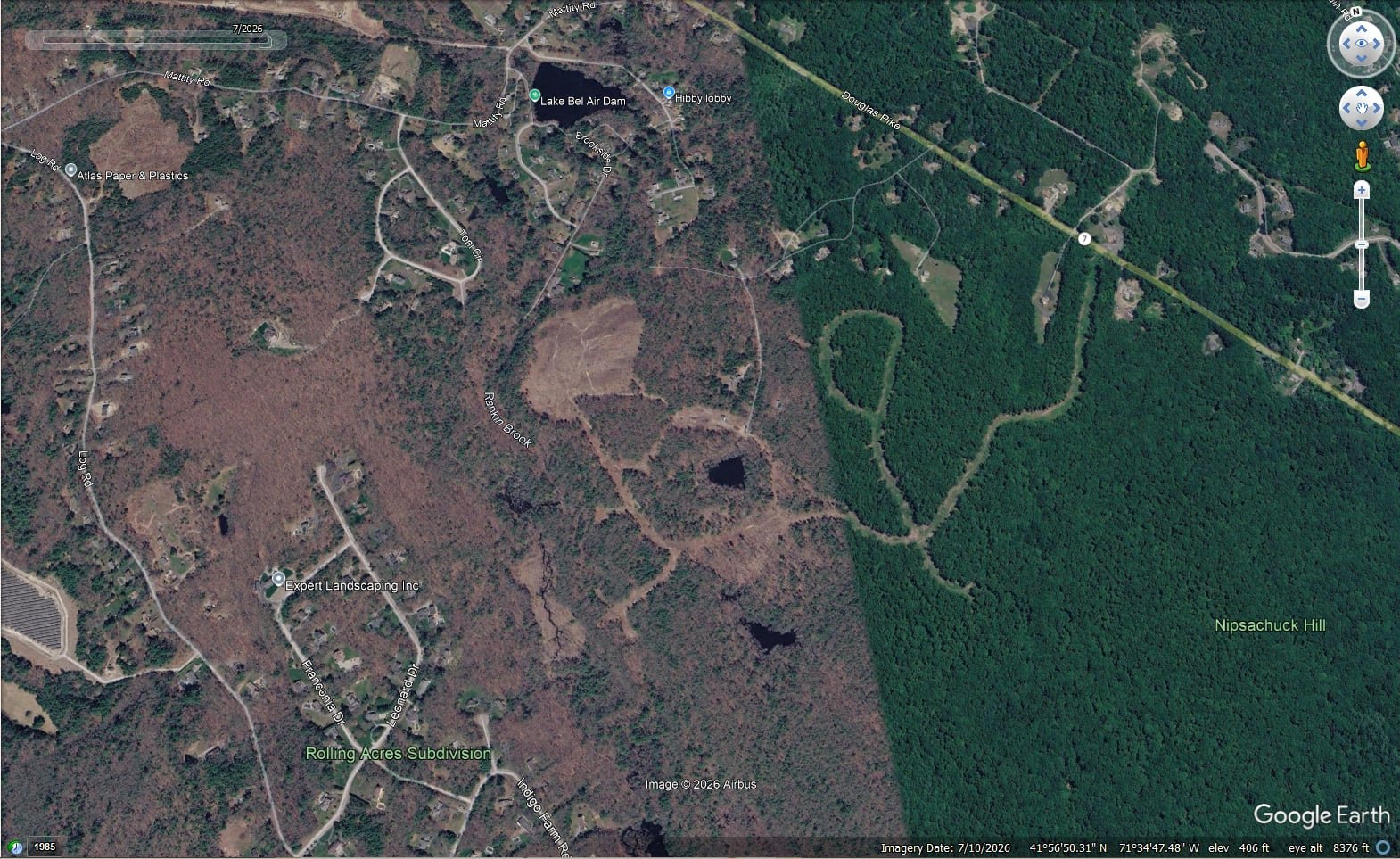
The developer clear-cut 17 acres of the site while the preliminary application was still pending — before the Planning Board had granted any approval to build.
2026: The Threats of Lawsuits
Nipmuc Tribe Chief Red Spirit and multiple tribal allies told the board in August 2026 that the land includes sacred ground never properly consulted on — separate from the burial-mound question already litigated, and tied to the site's role in the 1675–76 King Philip's War (part of the property borders the federally listed Second Battle of Nipsachuck Battlefield, added to the National Register in 2016).
August 27, 2026: The board approved the project's first phase 4–0 after the applicant's attorney said a denial would be appealed and could revert the project to a larger, 260+ unit version. Board members said on the record they personally opposed parts of the project but felt legally bound to approve it. The board dropped a proposed condition limiting the project's recreation fields; resident Michael Meo of North Smithfield Concerned Residents argued the fields don't meet the town's comprehensive plan and should be relocated.
Planning Board Member Jeff Porter speaks out on why he is compelled to vote yes on the application.
If we have designed a system in which we must hold our nose while voting, is the system truly working for the residents of the town?
What are the root causes? What can we do to fix it?
Demand A Transparent Process
How You Can Help
Review the Documents
The town's full Rankin Estates Document Center can be found here ! Educate yourself - it can be critical.
Demand Answers
Our Charter’s cemetery ordinance (§145) requires 30 days' written notice to the Nipmuc Nation and other tribal councils before any hearing on a suspected Native American burial ground. Regardless of the findings, were the Tribal Nations adequately notified?
Vote for candidates willing to close the "limited recourse" gap rather than settle under threat.
Require master plans to be re-evaluated (not just administratively extended) after a fixed number of years, or after a defined gap in activity.
Consider developing an ordinance that requires any project exceeding a size threshold to undergo a town-commissioned peer review of key studies at the applicant's expense, baked into the process, rather than leaving the Planning Board to wonder whether to request studies.
In this case, the applicant threatened to sue the Planning Board in real time. They acted on this threat - but the action was not yet present and may have been for naught. We should consider requiring the town solicitor to independently assess and state on the record the town's actual legal exposure (rather than simply accepting the applicant's framing) to provide a more unbiased view.
The 2014 Rankin settlement controversy is one example in a long line of what happens when draft settlement terms leak to the public. A rule requiring proposed settlement terms involving zoning, tax treatment, or land use to be published in full before a Council vote (not just summarized in a resolution) would prevent a repeat of this and speak to current discussions of Pound Hill Quarry.