
Material Sand and Stone and the Zoning Overlay Proposal
For over 50 years, the quarry operation at Pine Hill Road has tested the limits of North Smithfield’s zoning laws. What began as a family-owned plot has evolved into a massive industrial operation that—despite multiple court battles and resident complaints—continues to push for expansion into rural-residential areas. The following timeline reveals a pattern of "status quo" operations that bypass modern environmental and safety standards.
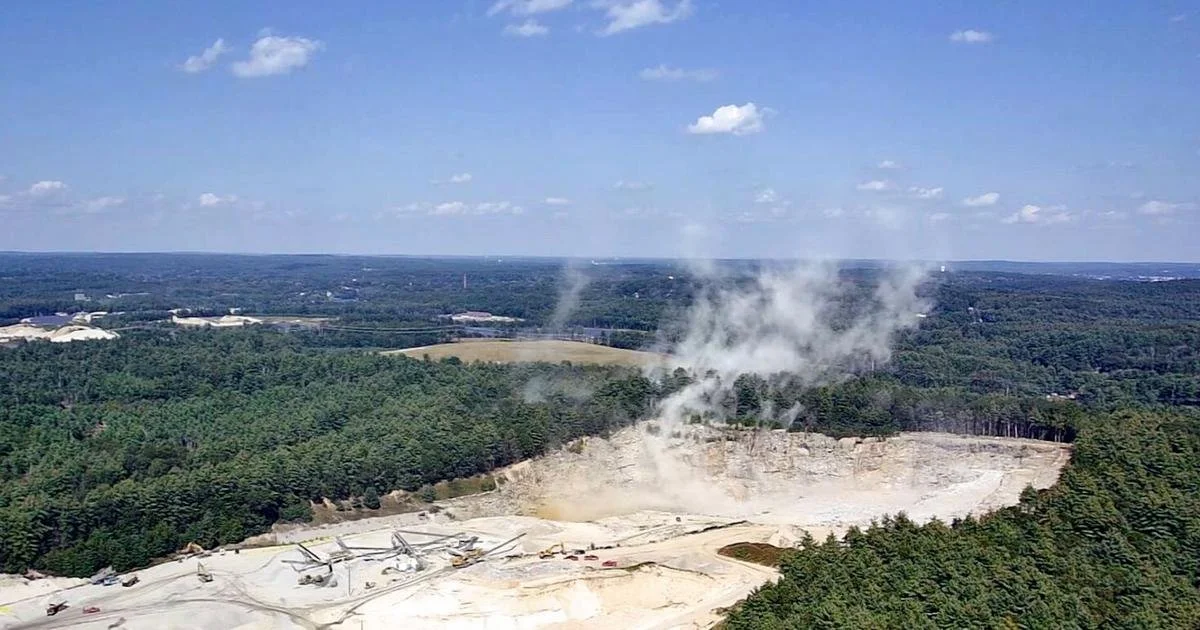
The Detailed Timeline of Material Sand and Stone: 1950–2026
The Early Years: Establishing the "Status Quo"
1950s: Carmine and Emma Pezza purchased land in North Smithfield to begin quarry operations.
1960s: The town passed its first modern mining ordinances, requiring site restoration plans, bonds, and special road use permits for heavy trucks.
1970s: North Smithfield officially banned new earth-removal operations. Existing sites were granted "grandfather rights," but with a critical caveat: these rights expire once a property is sold.
1985–1990: Expansion and the First Cease & Desist
1985: The Pezza family begins operating under the name "Material Sand and Stone, Corp."
1987: Leonard Pezza purchased a 32-acre property (Plat 7, Lot 38) to merge with the original lot.
April 1990: Zoning official Robert Benoit issued a cease and desist letter to Leonard Pezza, ruling that the newly purchased 1987 property did not enjoy pre-existing grandfather rights.
May 1990: In an attempt to continue operations, Pezza filed a letter claiming intent to use the land as a "horse farm."
2001–2022: Legal Gridlock and Resident Complaints
2001 & 2006: Superior Court rulings allowed the quarry to use residential roads and ordered the business to operate under a "status quo," effectively prohibiting the town from holding zoning hearings for years.
2013: The property was sold to Pound Hill Realty LLC. Despite the 1970s ordinance stating grandfather rights expire upon sale, the industrial use continued.
2022:Residents filed formal complaints regarding mining without licenses, illegal operating hours, and a persistent "asphalt smell" coming from the site. In December, Material Sand and Stone filed motions in Superior Court seeking entry of judgment and a permanent injunction based on the two prior court decisions. The judge ordered that the business could operate under its status quo during the court’s review.
2023–2025: The Push for Rezoning and Mediation
2023: A Superior Court Judge finally denied the Quarry’s petition for total autonomy, granting the town the right to oversight and requiring the company to apply for proper zoning permits.
2024:In March, Material Sand and Stone applied for a road use permit with the town council. It was subsequently granted over the objections of the property’s abutters, who claimed ongoing environmental concerns around expanding operations with minimal oversight. The RI Department of Environmental Management (RIDEM) notified the company of flooding violations, requiring the construction of culverts to manage illegal discharges.
2025:Material Sand & Stone requested a massive zoning amendment to create an "Industrial Special Management District Overlay." This would permanently change 89 acres of Rural Estate Agricultural land into an industrial zone. In March, following significant concerns from residents about the company’s credibility and ongoing operations, the town council continued the public hearing until May and decided to hire independent experts to review the quarry’s environmental study. Independent experts were not identified until June. Although the report was expected in August, it was delayed multiple times. A hearing was scheduled for October, but was postponed again after the company’s attorney failed to notify abutters of the meeting. A new hearing was scheduled for December.
On December 15, 2025, the Town Council, at the motion of Councilman Beauregard, chose to pursue mediation.
2026: Snip, Snap, Snip, Snap Mediation
March 2026 – Mediation begins. Mediation formally starts in March 2026.
June 15, 2026 – The quarry withdraws its overlay petition. After a two-hour-plus executive session, Material Sand & Stone's attorney announced at the podium: "The petition/application is hereby withdrawn without prejudice to other remaining legal prerogatives available to the applicant”, pulling the Industrial Special Management District Overlay request rather than have it voted on — but explicitly reserved the right to bring some other legal approach later. Nobody explained what withdrawal actually meant for the underlying litigation or the quarry's ongoing operations.
August 3, 2026 – First settlement draft rejected, mediation "fails." A memorandum of understanding was brought to the council and rejected. Councilor David Punchak then announced: "We have instructed Attorney Robenhymer to cease all mediation discussions and move forward with the court case."
August 17, 2026 - Despite Punchak's statement two weeks earlier, the council came back with a revised MOU and approved it 3–1, with Punchak casting the lone dissenting vote and DeCristofaro recusing as an abutter. The company's attorney said the document would not be made public until fully executed.
September 1, 2026 – The settlement document is finally posted publicly, two weeks after having been approved.
"This is what it looks like when a town protects one operation and enforces the law on everyone else... That is not equal protection under the law. That is the town surrendering its own authority."
Demand A Transparent Process for Zoning Laws
A voluntary code is a suggestion, not a standard. North Smithfield deserves a government that is accountable to its people, not one that operates above the rules.
Email the Council: Private mediation excludes the very residents whose property values and health are at risk. Send an email to the Council demanding that all negotiations regarding the Industrial Overlay be held in public.
Share the Record: Ensure your neighbors know that zoning laws are on the ballot in November.
Vote: In the next election, we must elect officials who prioritize environmental protection over industrial exemptions.